
Rocky Hill, NJ · Roofing and exterior services
Roofing Contractor Serving Rocky Hill and Nearby Communities. Our office is on Washington Street.
Pujols Roofing & Siding works out of 130 Washington St, in the middle of town. Roof, siding, gutters, windows and paint, a crew for each trade, one family, one contract. We know the old houses here and the historic district rules. Start with a consultation at your house.
Rated 5.0 from 53 Google reviews
We check the roof and walk the whole outside. Nothing to sign, price holds 90 days.
Google reviews Rocky Hill
What your Rocky Hill neighbors say.
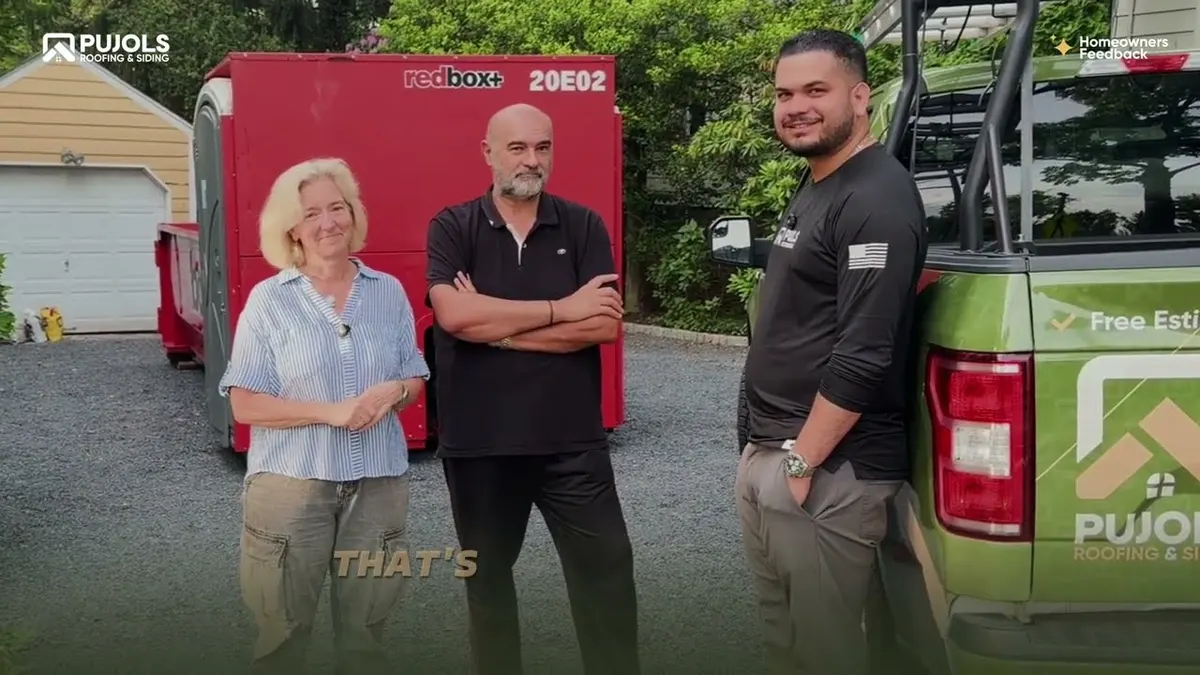
“Call me and I will tell you the real story.”
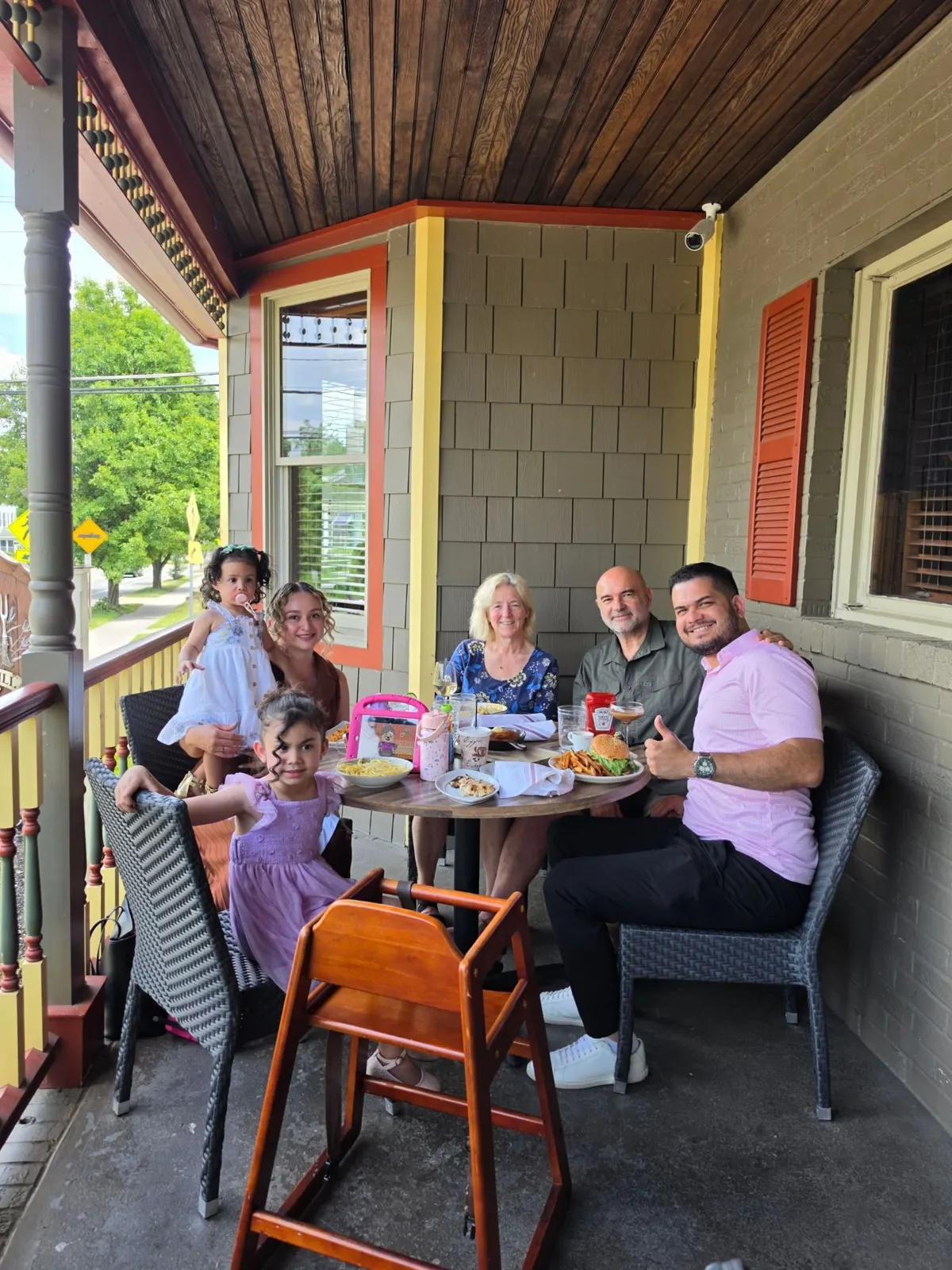
-
Five stars on Google.
“Manny and Franklin really know what "customer service" means. They were professional every step of the way… It looks brand new now!”
Read the full review
From the job
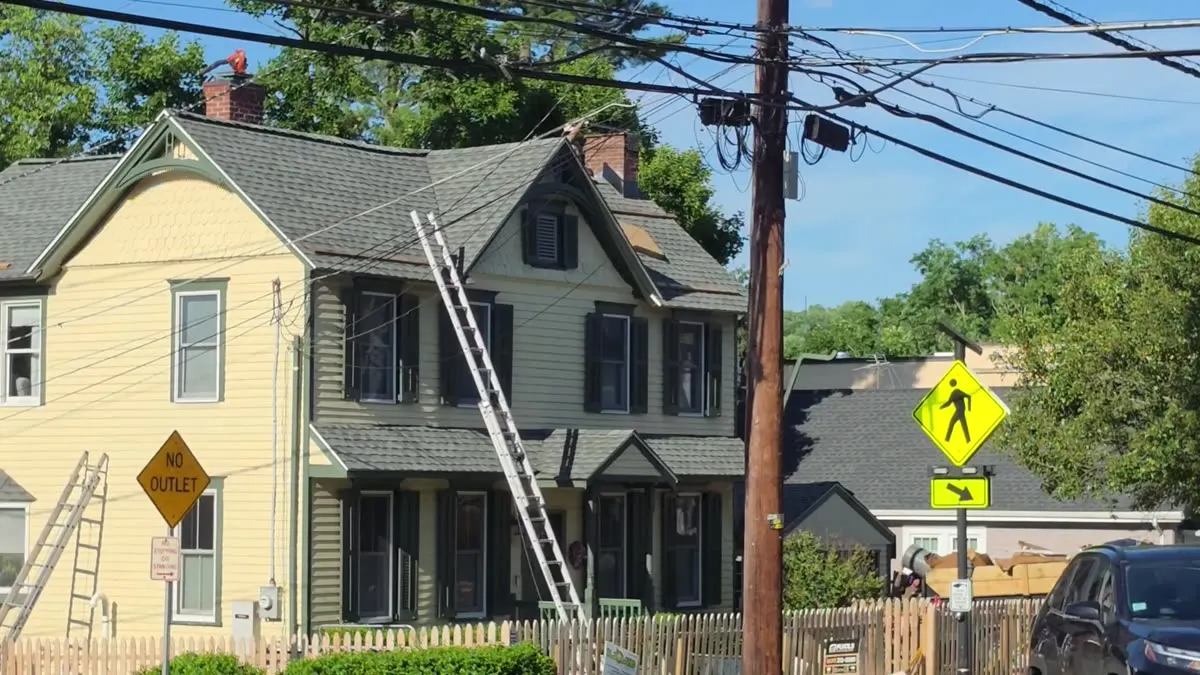
Manny and Franklin really know what "customer service" means. They were professional every step of the way. We entrusted Pugols Roofing and Siding with roofing, gutters, soffits, painting, and new doors on our home built in 1900. It looks brand new now!
-
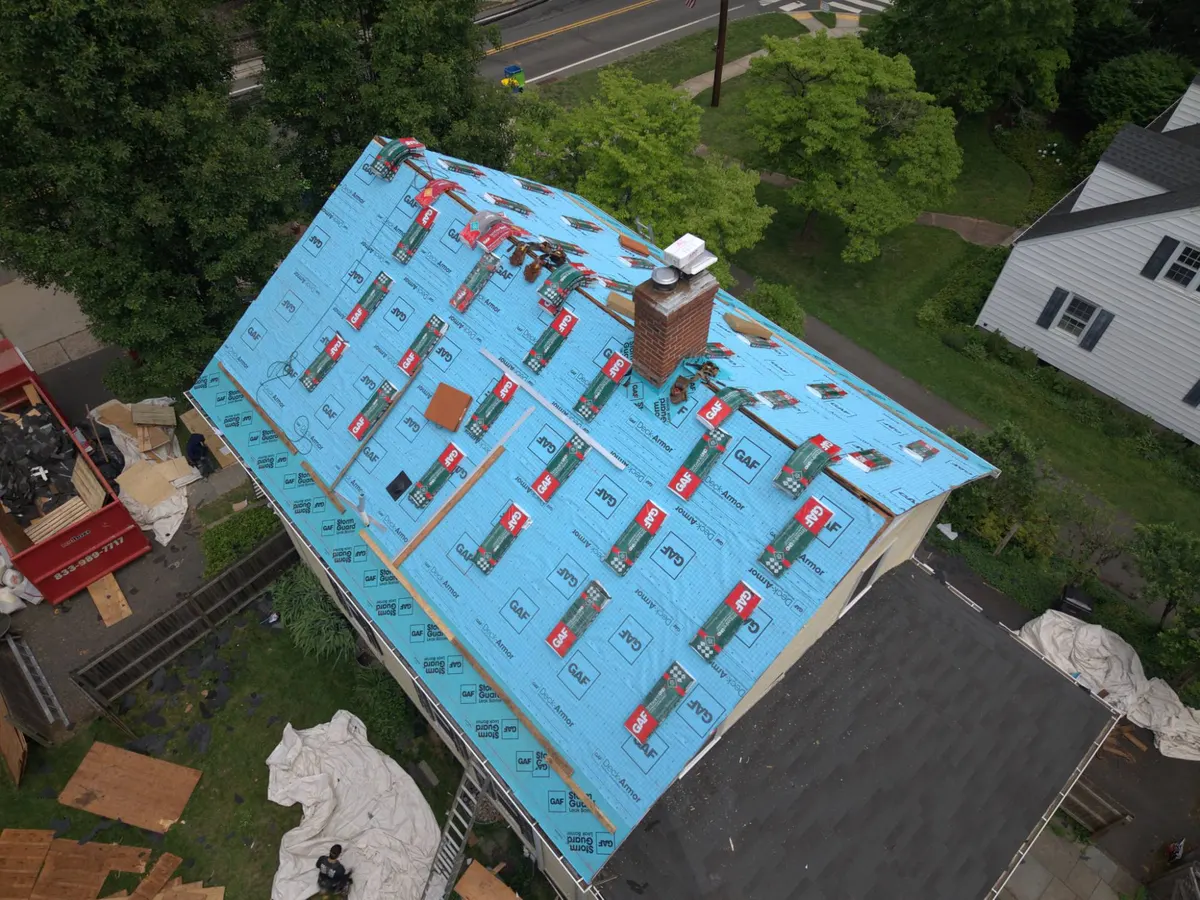
Five stars on Google.
“Wonderful experience!!! Pujols Roofing is operated the way a company should be… honest, fair, reliable and treat their customers respectfully. I highly recommend them… and I have!”
See the job
From the job
-
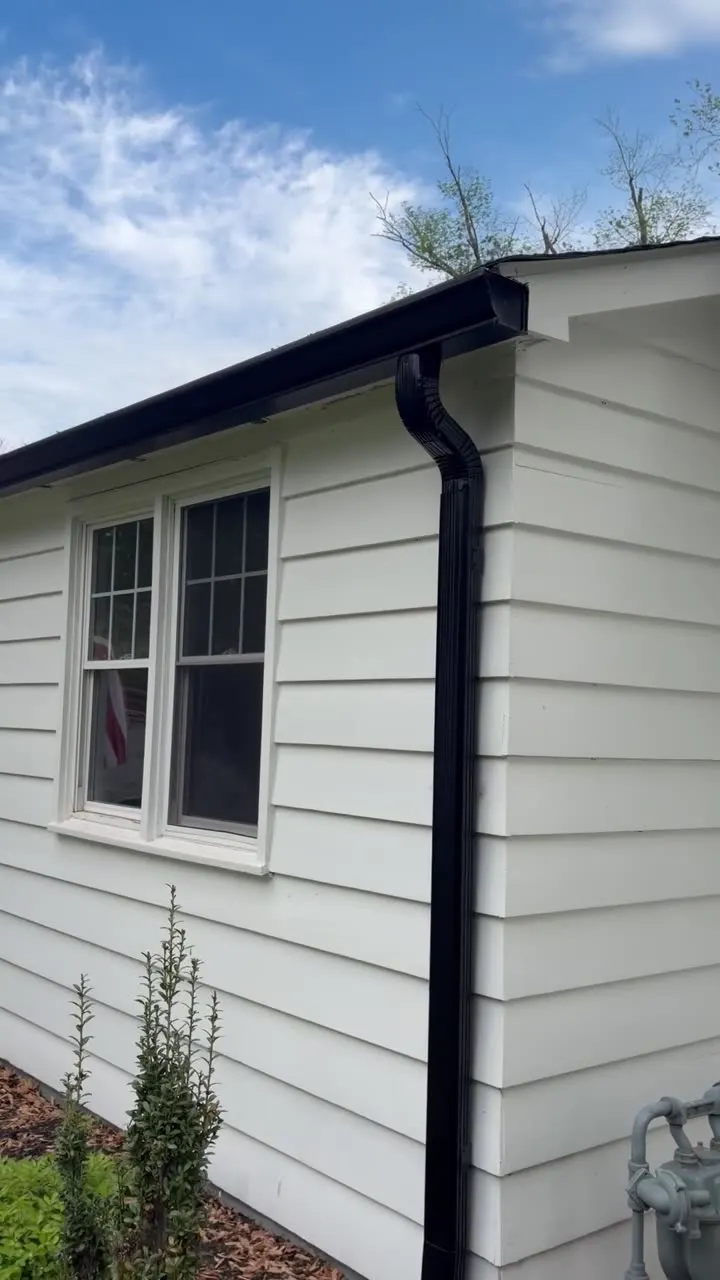
Five stars on Google.
“He got back to me immediately, came for a quote quickly, and started to work to replace our gutters the following week, just on time before the heavy rain starts!”
Read the full review
From the job
Manny has been extremely professional since the first contact. He got back to me immediately, came for a quote quickly, and started to work to replace our gutters the following week, just on time before the heavy rain starts! They were extremely polite, respectful and flexible which made the experience very smooth. They are very skilled and caring and I wouldn’t hesitate to hire them again and recommend them to anyone looking for professional help to upgrade their roof/gutters.
Our work in town
Rocky Hill houses we've worked on.
Real houses, a few minutes from the office. Street name, what we did, and how it turned out.
-
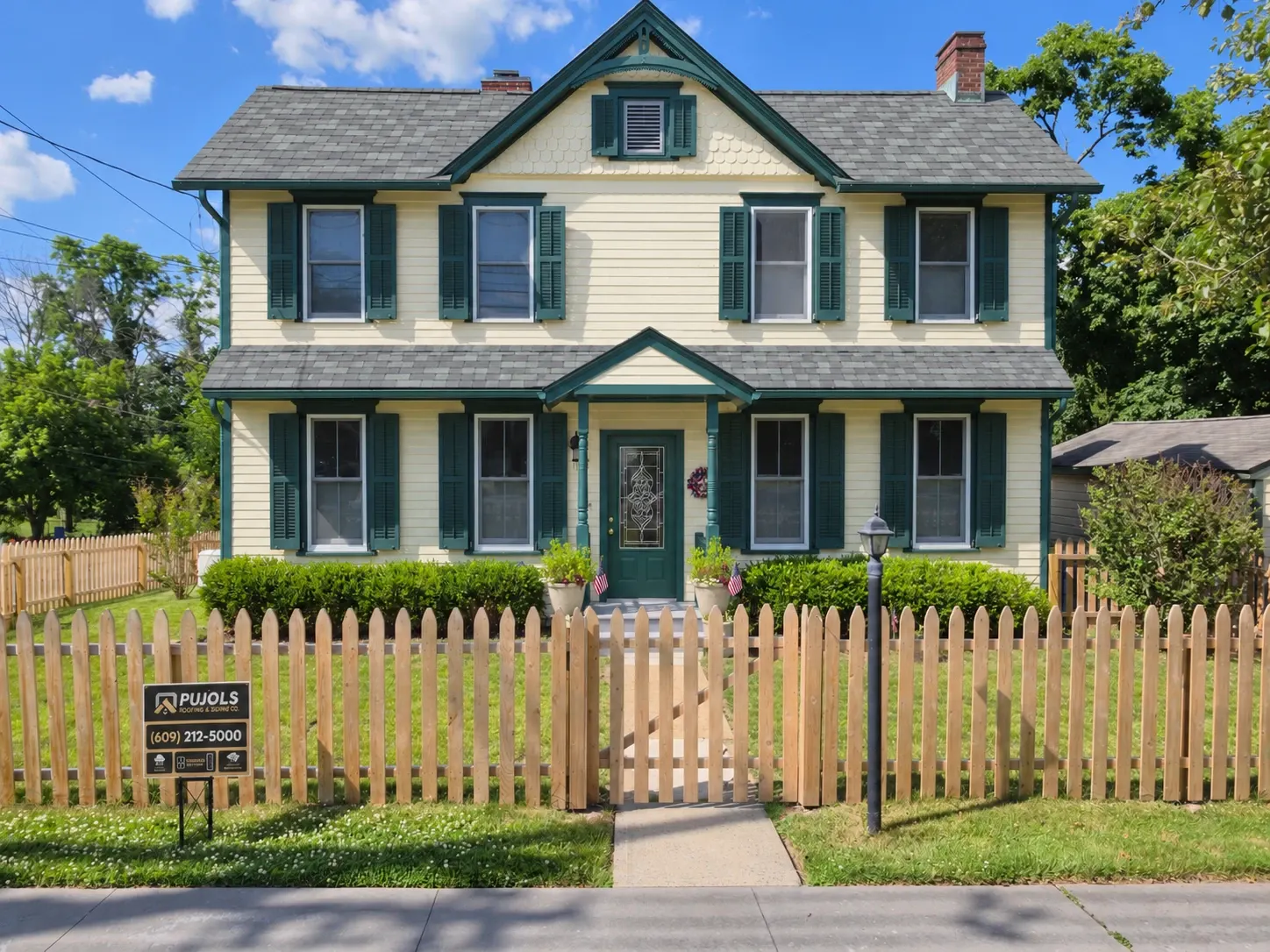
Full exterior makeover
Washington Street
Roof, gutters and soffits, fresh paint with green trim and shutters, and a new front door on a home built in 1900.
-
Roof and gutters
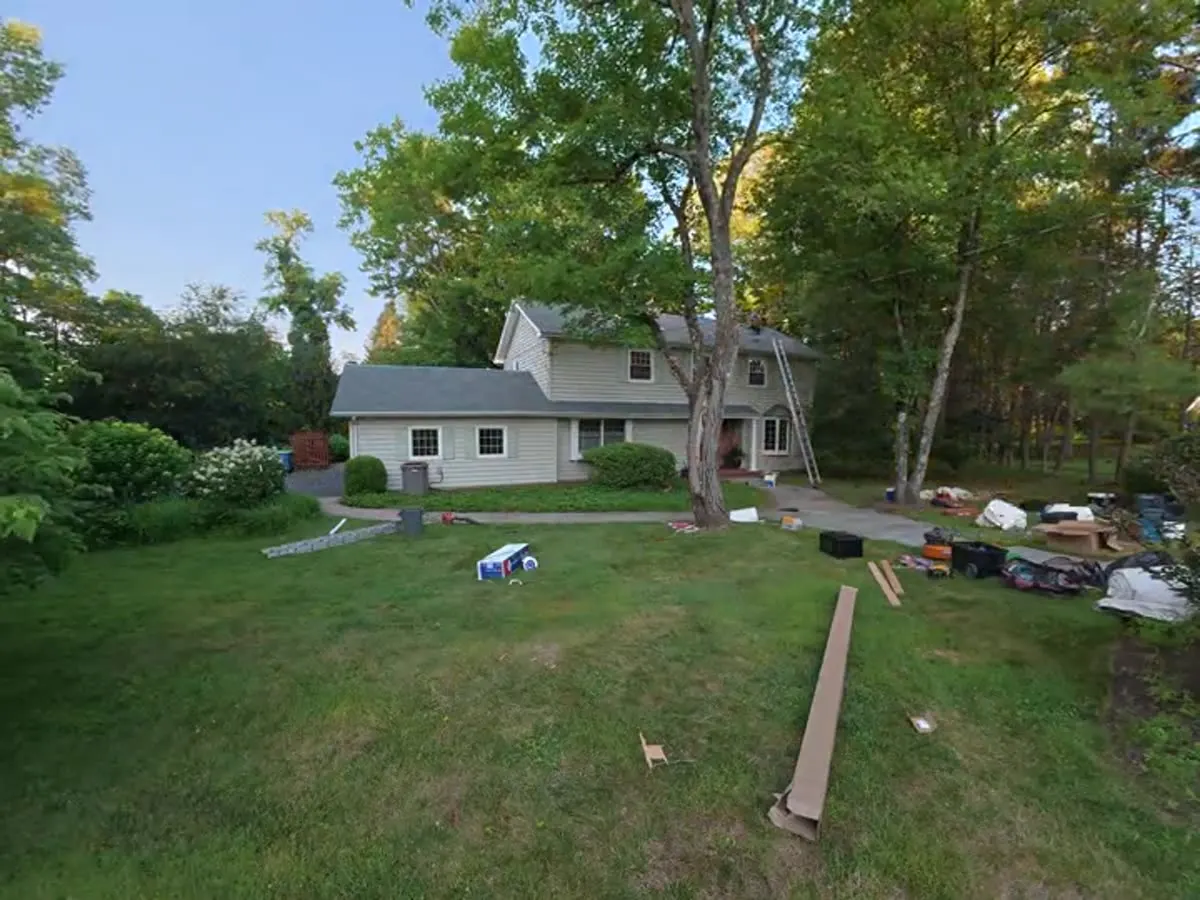
Lemore Circle
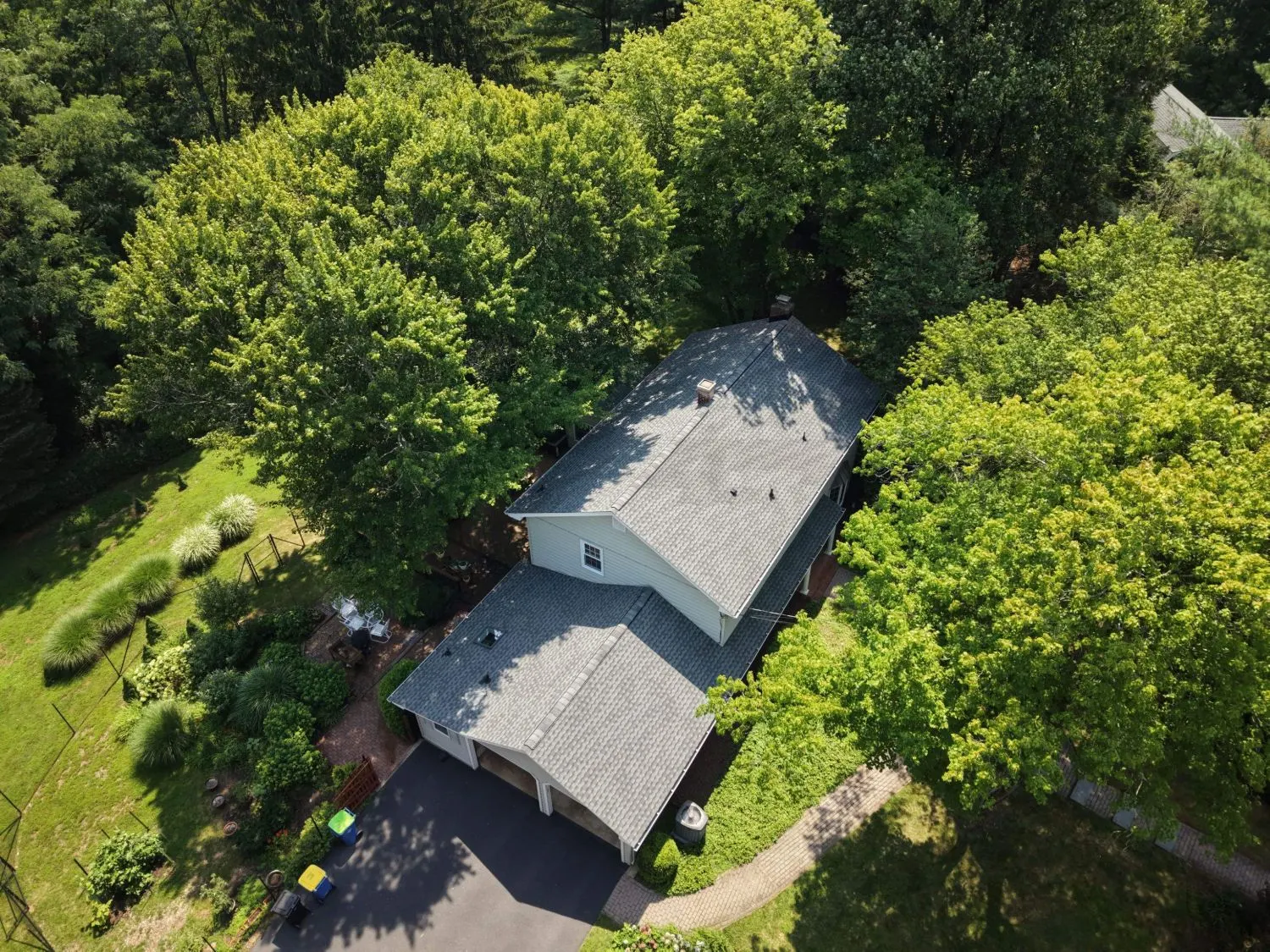
The old plywood was toasted and rotted, so all of it came off first. Then a new roof and gutters on a colonial under the trees, finished ahead of schedule.
-
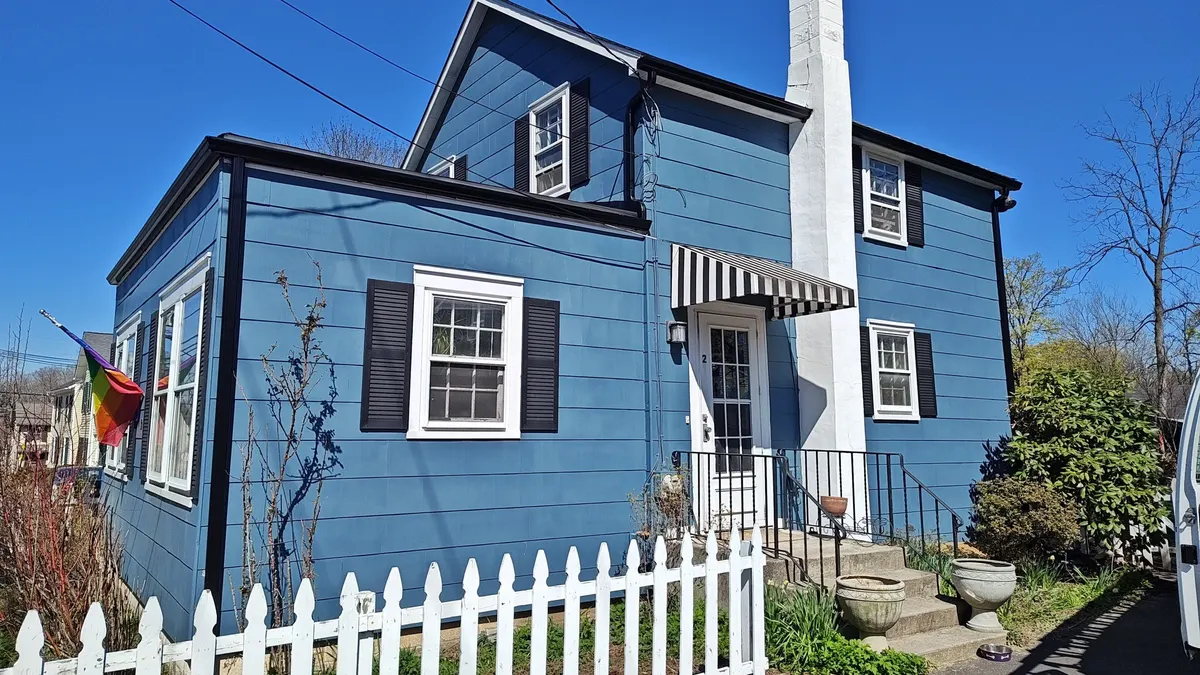 Roof and gutters
 Princeton Avenue
A new roof and gutters on a blue two-story house with the picket fence out front.
-
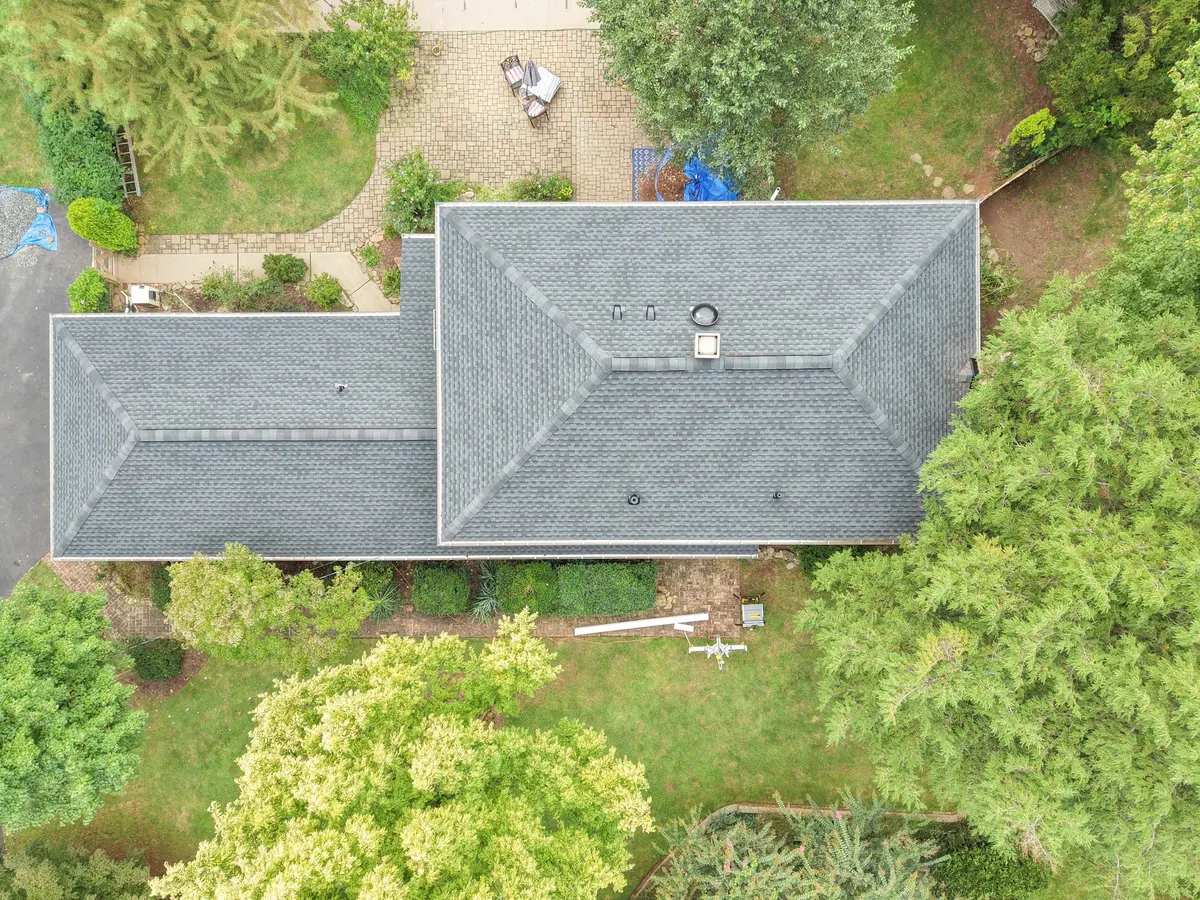 Roof, gutters and soffit
 Montgomery Avenue
Roof, gutters, soffit and drains on a big white colonial, one of our largest jobs in town.
Under the shingles
What we find on Rocky Hill roofs.
This part is our own experience, not a rule book. The older the house, the more of these we see:
- 1
Layers. Many roofs here have two or three layers of shingles, and on the 1800s houses there is sometimes the original wood shingle under all of it. It all comes off. We price the roof down to the deck, so there is no surprise on day one.
- 2
Plank decking. Old houses have wide boards under the shingles, not plywood, often with gaps between them. New shingles need a solid deck, so some or all of it gets plywood over it. We photograph the deck and tell you before we nail anything.
- 3
Porch roofs and additions. A steep main roof meeting a low porch roof or a later addition is where Rocky Hill houses leak. The joint needs proper flashing and, in some cases, ice-and-water barrier all the way up.
- 4
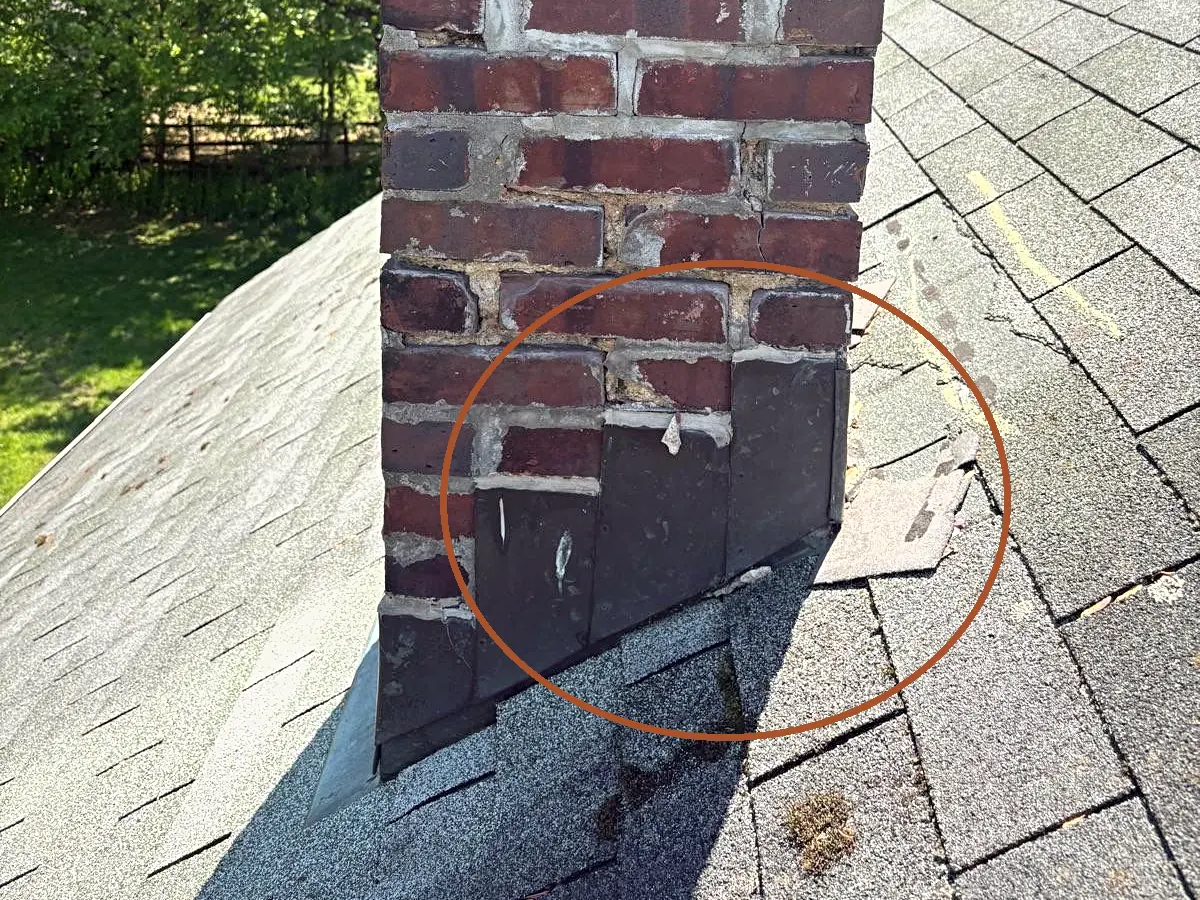
Old brick chimneys. Loose mortar and tired flashing at the chimney are the number one leak we find on houses built before 1930.
- 5
Attics with no ventilation. Houses from the 1800s were never built with soffit or ridge vents. A hot attic cooks shingles from below in summer and builds ice dams in winter. A new roof is the time to fix the airflow.
- 6
Big trees. The streets here are tree-lined, which is part of why people buy here. It also means moss and lichen on the north slope, full gutters every fall, and branches that scrape shingles. We size gutters for it and look at the tree line on every visit.
- 7
The 1950s capes and colonials have their own list: dormer valleys that ice up, bathroom fans venting into the attic, and a second or third roof already on top of the first.
-
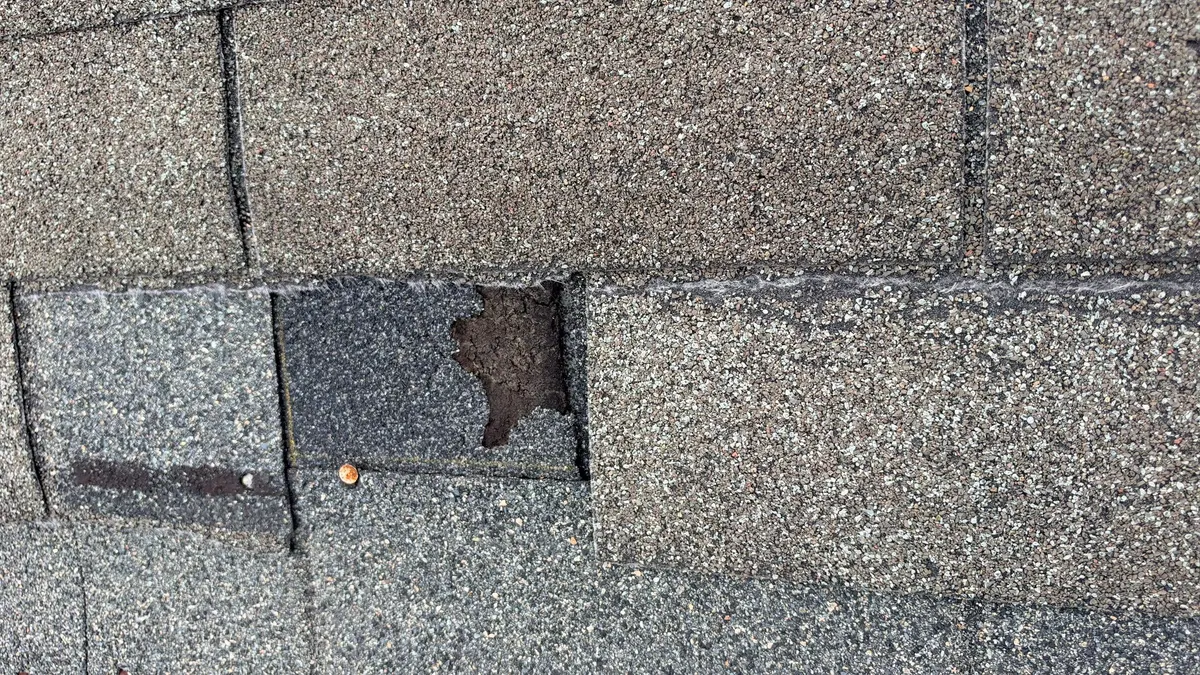
1Shingles over old shingles
-
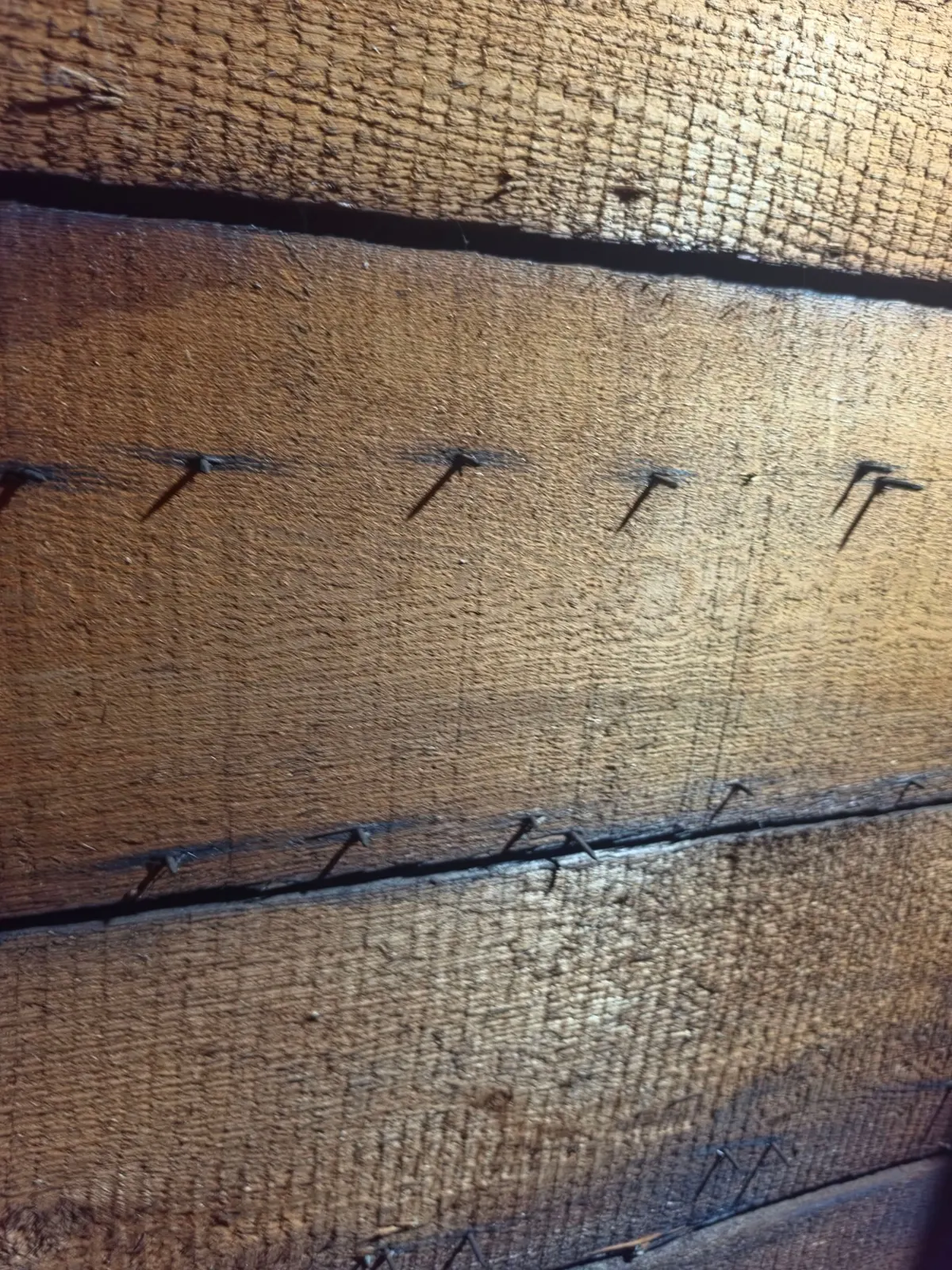
2Plank deck, gaps and all
-
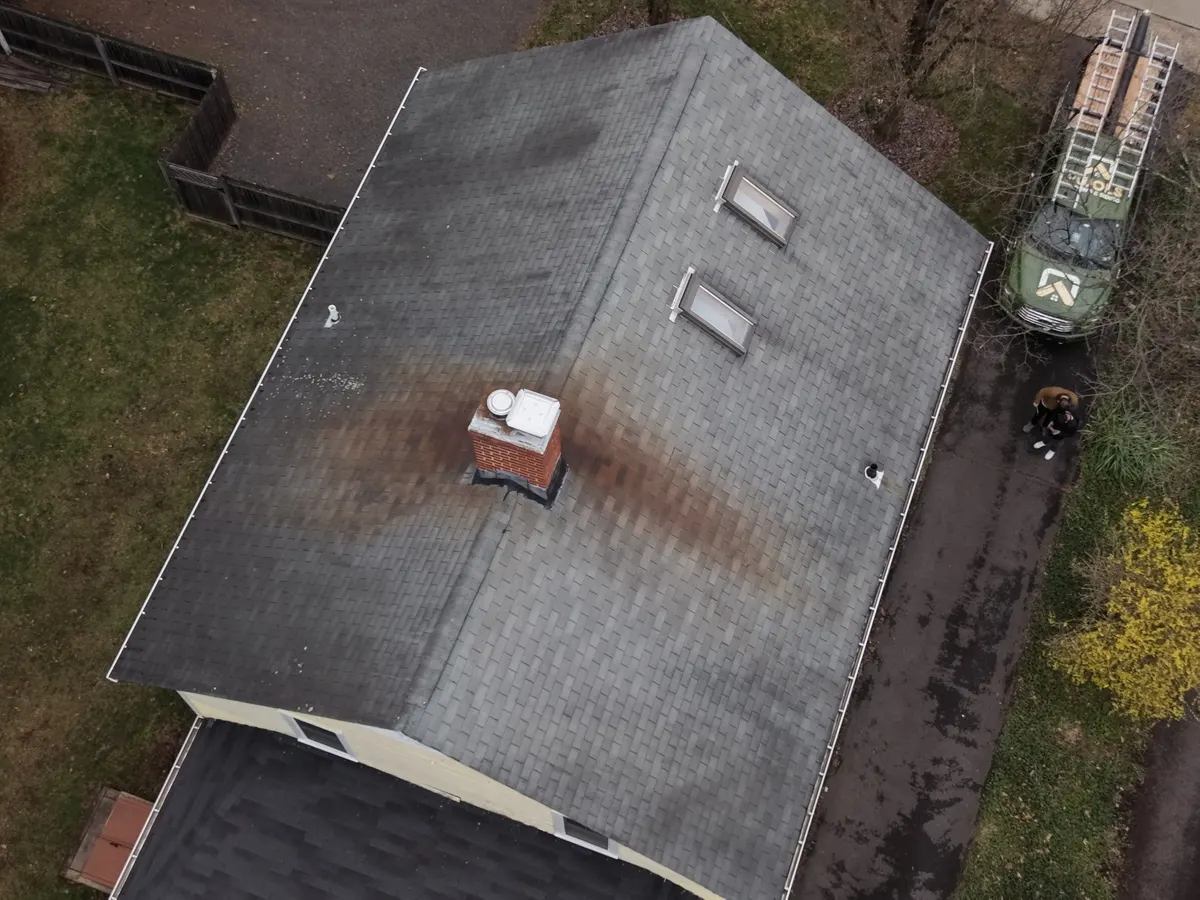
4An old chimney on a tired roof
-
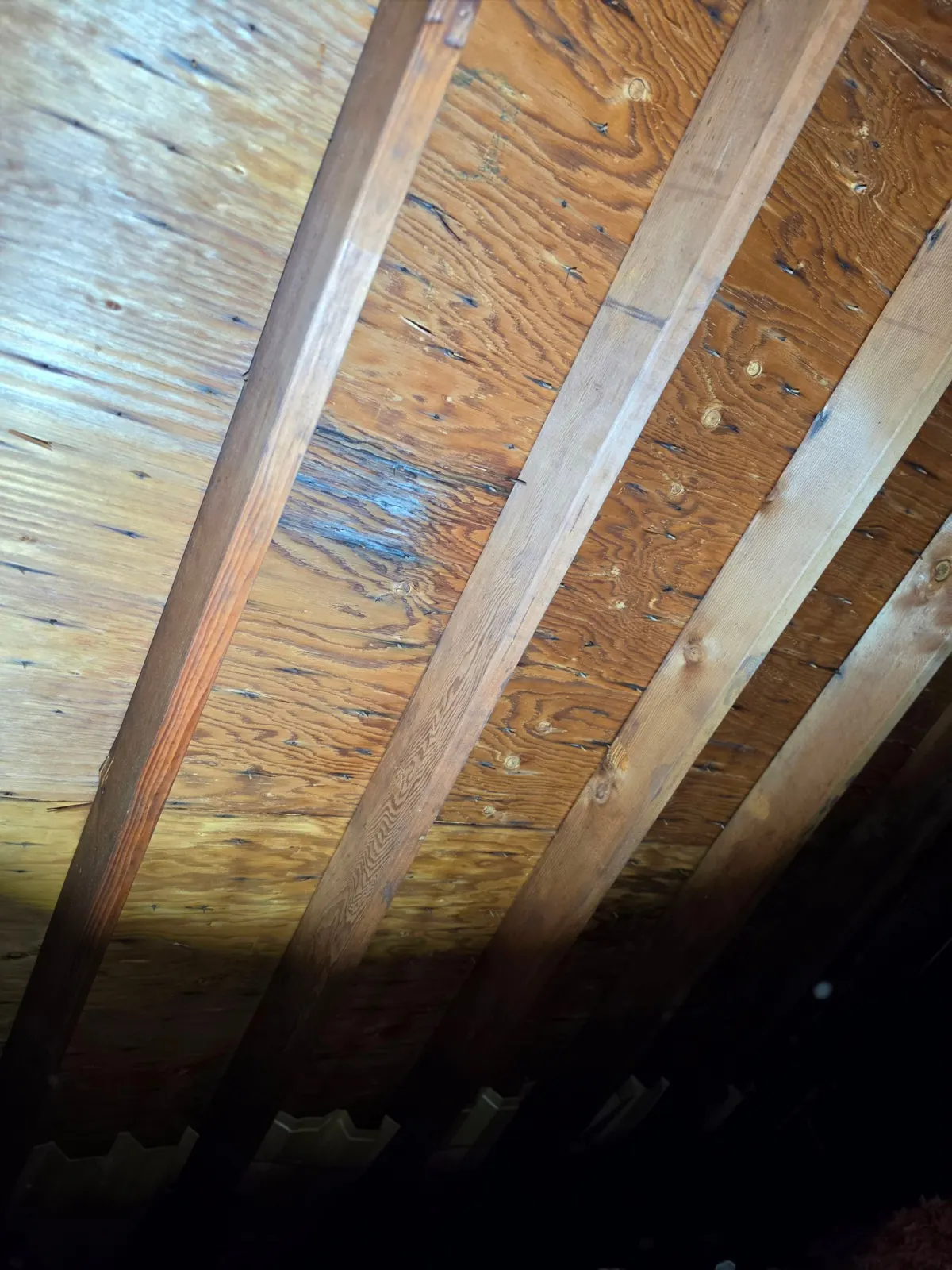
5Toasted plywood, from the attic
That's why the visit comes first. We get on the roof, photograph every part of it, and tell you what's there before anyone talks price.
Permits and approvals
The rules for roof and siding work in Rocky Hill, and how we handle them.
Rocky Hill has three sets of rules that can touch an exterior job: the state building code, the borough's zoning office, and the historic district. Here is what each one means for you, checked against the borough's own documents.
-
The state building permit.
For a single-family house in New Jersey, replacing the roof covering, replacing the siding, and replacing gutters and leaders are "ordinary maintenance." No construction permit, no inspection, no notice to the construction office. Two exceptions matter on old houses: if we replace roof sheathing or rafters, that is structural and needs a permit, and polypropylene siding always needs one (we don't use it). Rocky Hill's construction permits are handled by the state, not by Borough Hall.
-
The borough zoning office.
Rocky Hill's zoning officer is the person who says whether your project needs a zoning permit or a historic district approval. The office is open Wednesdays, 3:30 to 6 pm, at Borough Hall, 15 Montgomery Ave, (609) 924-7445. The borough recommends a short conversation before any paperwork, and so do we. It's free and it settles the question.
-
The Historic Preservation District.
The district covers most of the houses on Washington Street, some on Montgomery Avenue and Princeton Avenue, and all of Grove Street, Park Avenue, Reeve Road and Skillman Avenue. The borough map shows the exact line. If your house is inside it, the borough asks four questions about exterior work:
- Is the house in the district? Yes
- Is the work on the outside and visible from a street? Yes
- Does it build, alter, restore or remove part of the house? Yes
- Is it more than ordinary maintenance or painting? Yes
If the answer to all four is yes, you need a preservation plan approved before the work starts.
What that means for a roof or siding job:
In kind
- Same material, similar color
- Work starts
Like for like needs no approval.
The borough's definition of ordinary maintenance is a repair with no change in the visible materials and finishes, replacing in kind. A new asphalt roof in place of an old asphalt roof, in a similar color, is the usual case.
Minor plan
- File a minor plan
- Historic Subcommittee
- Work starts
A change you can see from the street needs a plan.
Going from wood shingle to asphalt, from slate to shingle, from wood clapboard to James Hardie or vinyl, or to a very different color: plan on filing. Most of these are "minor" plans, reviewed by the Historic Subcommittee, and the borough says many in-kind requests get approved quickly. A minor plan needs color photos of the house and the neighbors, a written description of what changes, and a sample or catalog sheet of the new material.
Full board
- File 3 weeks ahead
- Notice within 200 feet
- Planning Board, third Thursday
- Work starts
Big changes go to the full Planning Board.
Additions, porches rebuilt differently, anything that changes the shape of the house. The board hears applications on the third Thursday of each month, filings are due three weeks before, and neighbors within 200 feet get notice.
Paint color is your choice. The ordinance does not cover it.
Wood is encouraged, but not required. The borough's guide says vinyl or aluminum siding is acceptable with conditions. Homes built before 1930 are held to the stricter standard: keep or match the original details, cornices, brackets, trim, porches, and match roofing and siding in size, shape and texture.
How we handle it.
Our consultation already produces most of a minor preservation plan: photos of every side of the house, the product we recommend, and the spec sheet for it.
We bring a sample of the shingle or siding.
We build the review time into the schedule, so your price holds for the 90 days and your start date doesn't move while the borough reviews.
If your project needs the full board, we tell you at the visit, not after you've signed.
The rules above come from the Borough of Rocky Hill's preservation guide and preservation plan application, and from the New Jersey Uniform Construction Code, as of September 2026. The borough's zoning officer has the final word on your house. Call (609) 924-7445.
What we do here
Everything on the outside of a Rocky Hill house.
One company, a crew for each trade, one contract. Each service has its own Rocky Hill page with prices and details.
-
Roof replacement in Rocky Hill
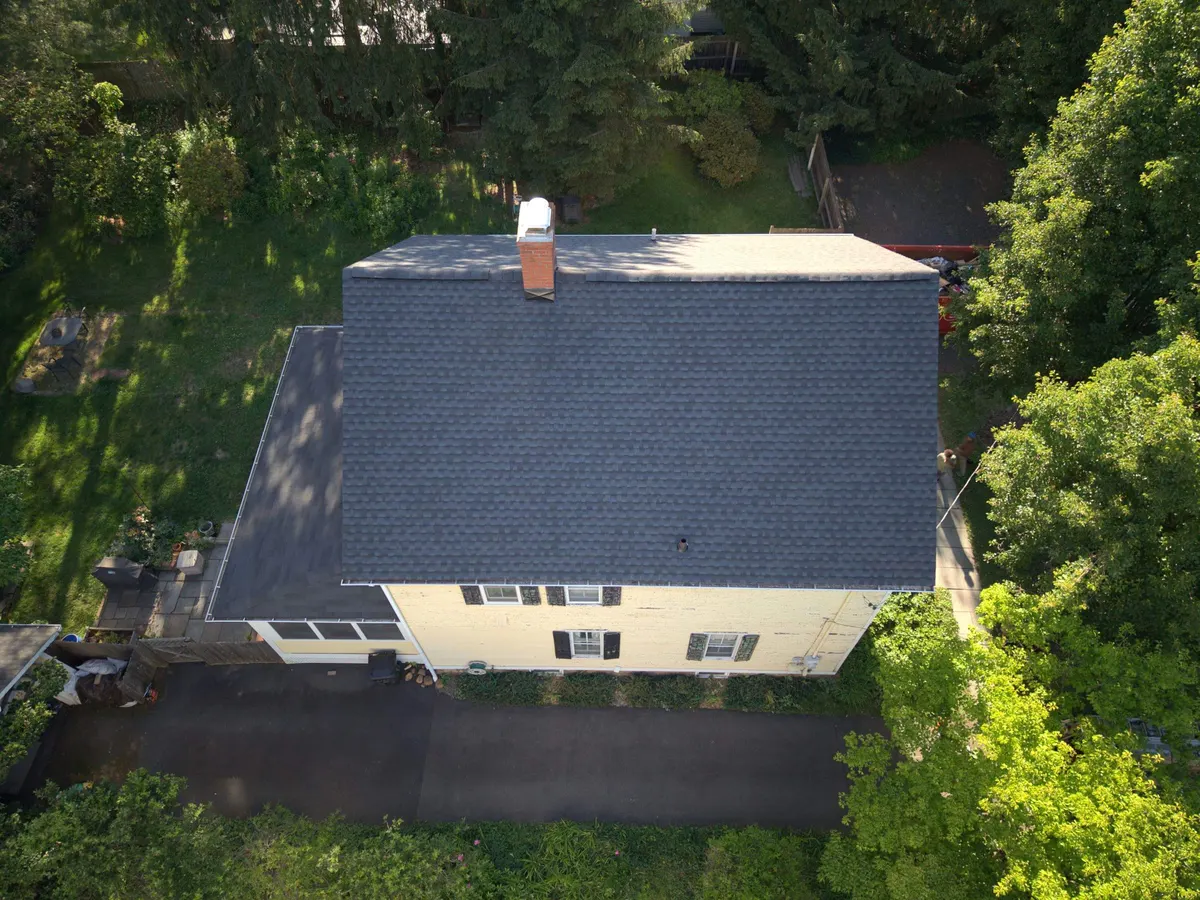
GAF Timberline shingles, down to the deck, plank decks sheathed, old chimneys reflashed. Prices by roof size are on the page.
Photo: Rocky Hill -
Roof repair in Rocky Hill
Leaks at chimneys, porch roofs and valleys. A repair is the right call for now when the roof has years left. We tell you which it is.
-
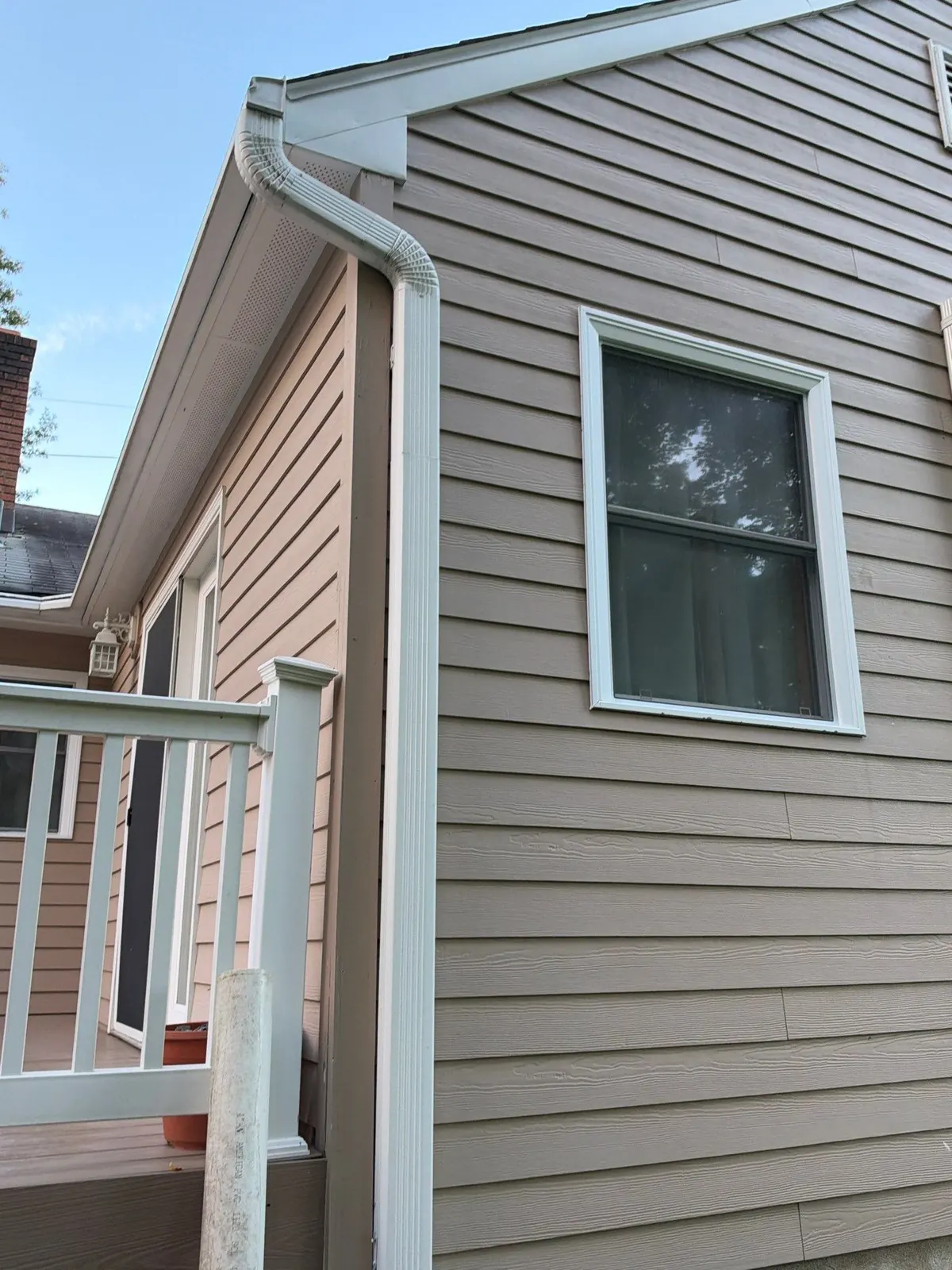
Siding in Rocky Hill
James Hardie, Wolf Portrait, CertainTeed RISE and vinyl, with the trim and details that old houses need to still look like themselves. Outside the historic district it is a normal job. Inside it, the change goes through the district review first, and we handle that with you.
Photo: Rocky Hill -
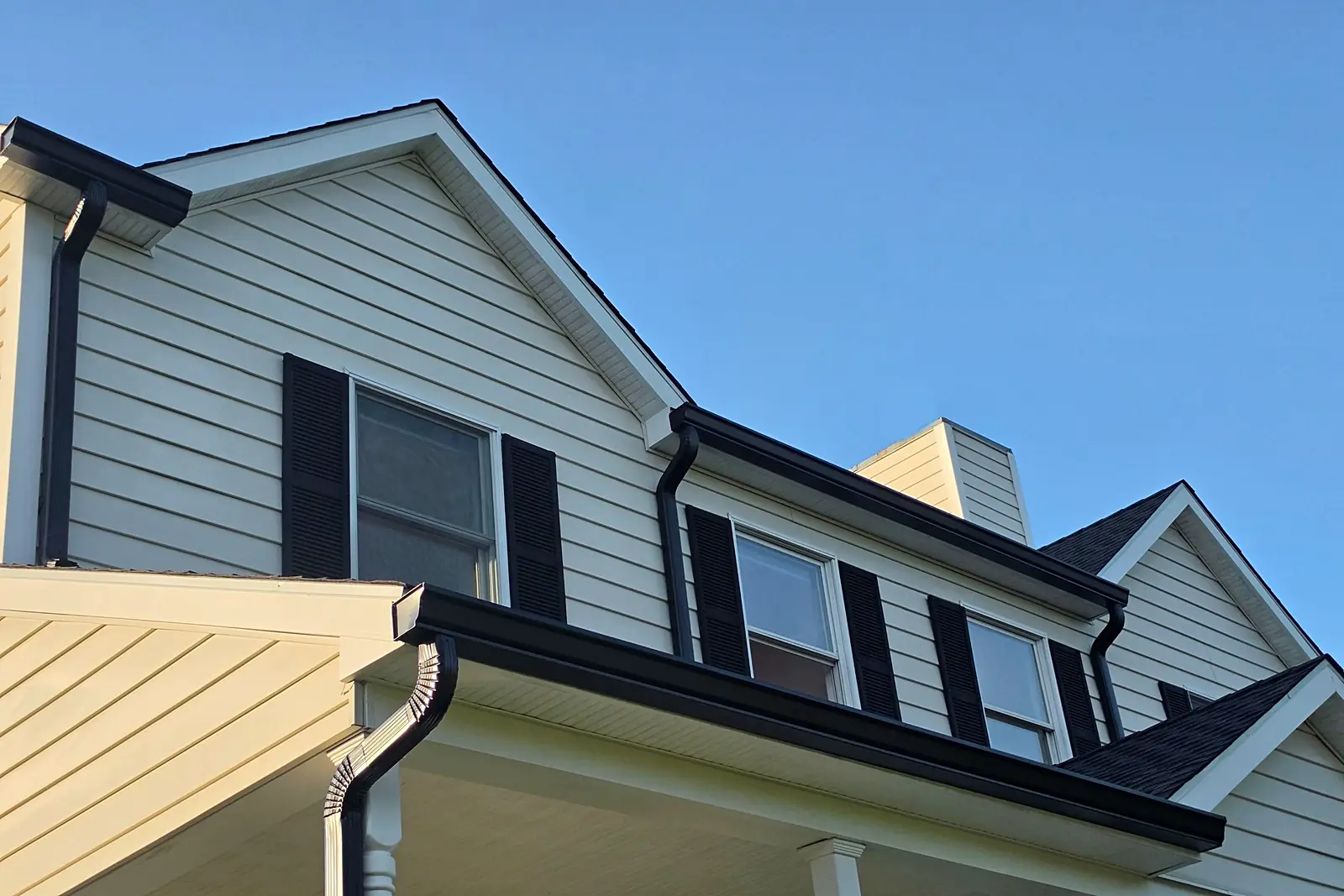
Gutters and soffit in Rocky Hill
6-inch seamless gutters sized for the trees on these streets, soffit and fascia done at the same time.
-
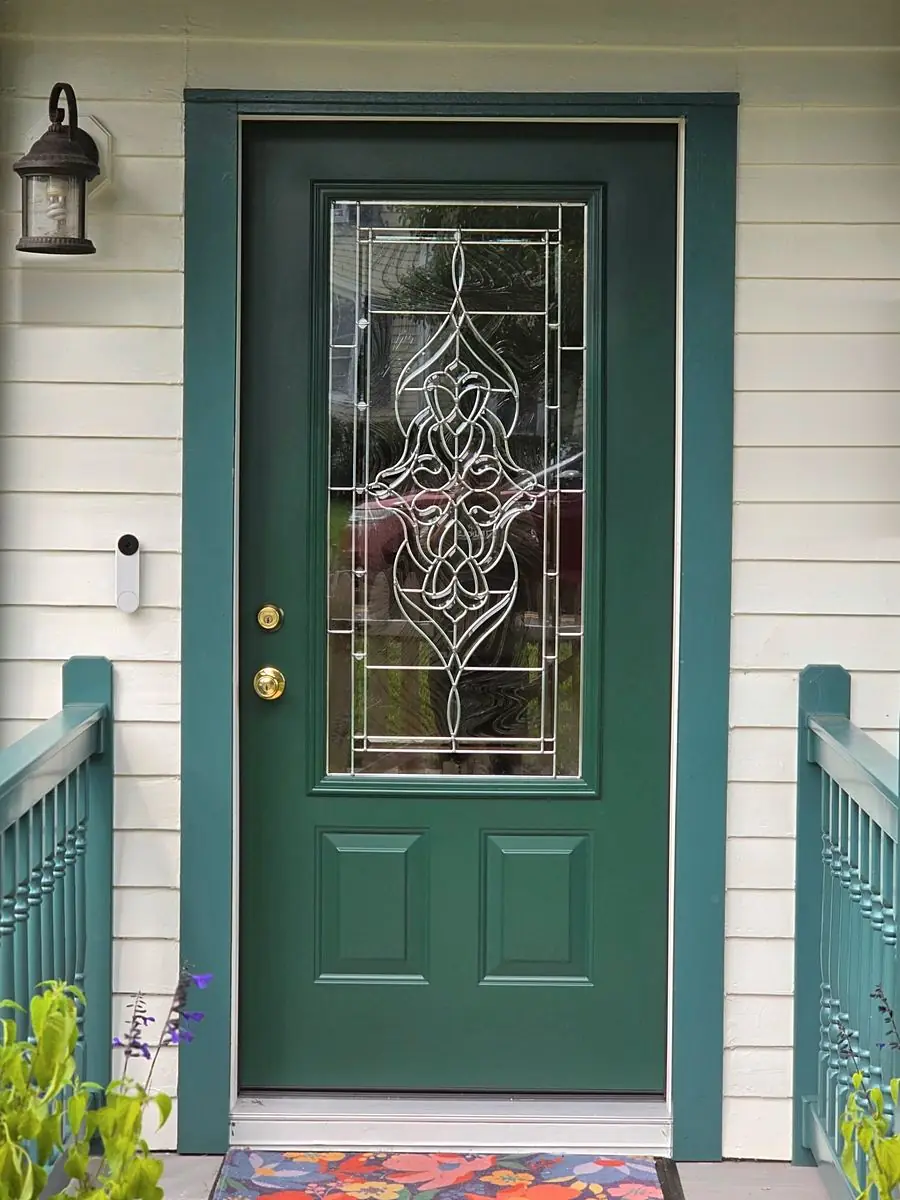
Windows and doors in Rocky Hill
ProVia windows and Therma-Tru doors, installed by the same crew that does your siding, so the trim lines up. Divided lights and shutters sized to the window for district houses.
Photo: Rocky Hill -
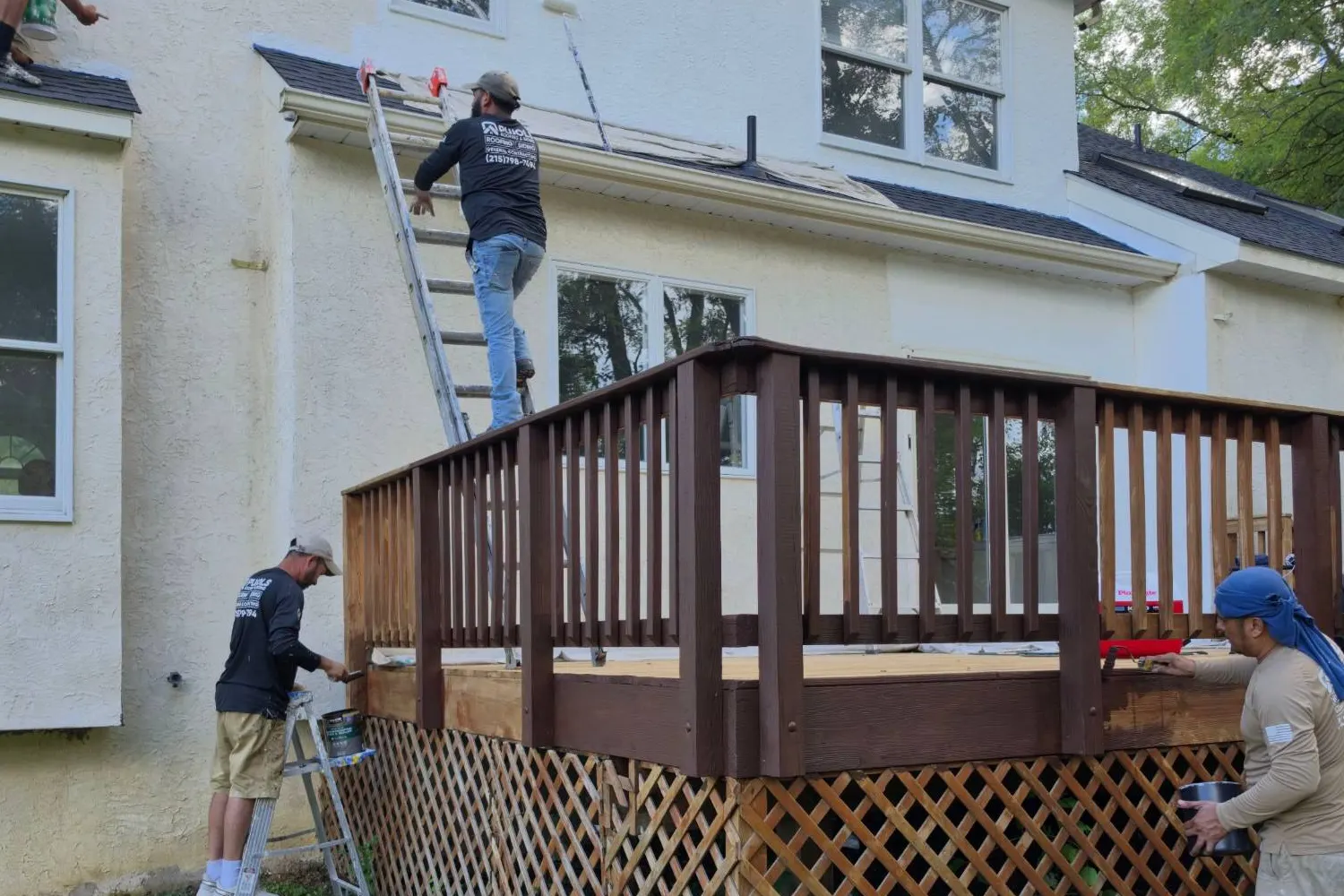
Exterior painting in Rocky Hill
The finish that ties the outside together. The one part of the job the historic district leaves entirely to you.
Photo: Rocky Hill -
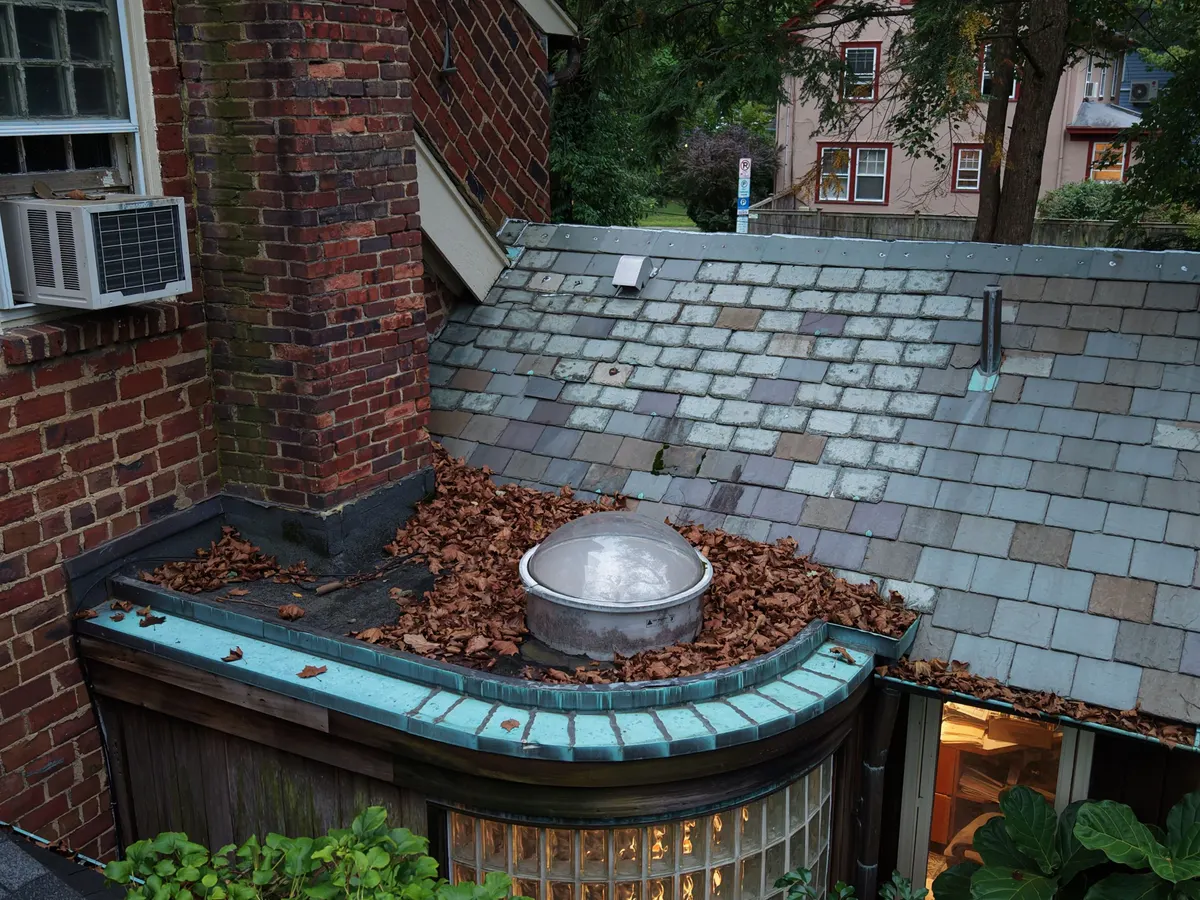
Historic and specialty roofing
Cedar, copper, composite slate. For the houses where the roof is part of what makes the street.
Our office
130 Washington St, Rocky Hill. Come by, or we'll come to you.
130 Washington St
Rocky Hill, NJ 08553
Mon-Sat 9am to 7pm, Sun 11am to 3pm
Get directions See us on Google
We handle inspections and exterior projects within approximately one hour of this office. In Rocky Hill, that means the crew, the office and the owner are all minutes from your house, before the job and for the three years of Stewardship visits after it.
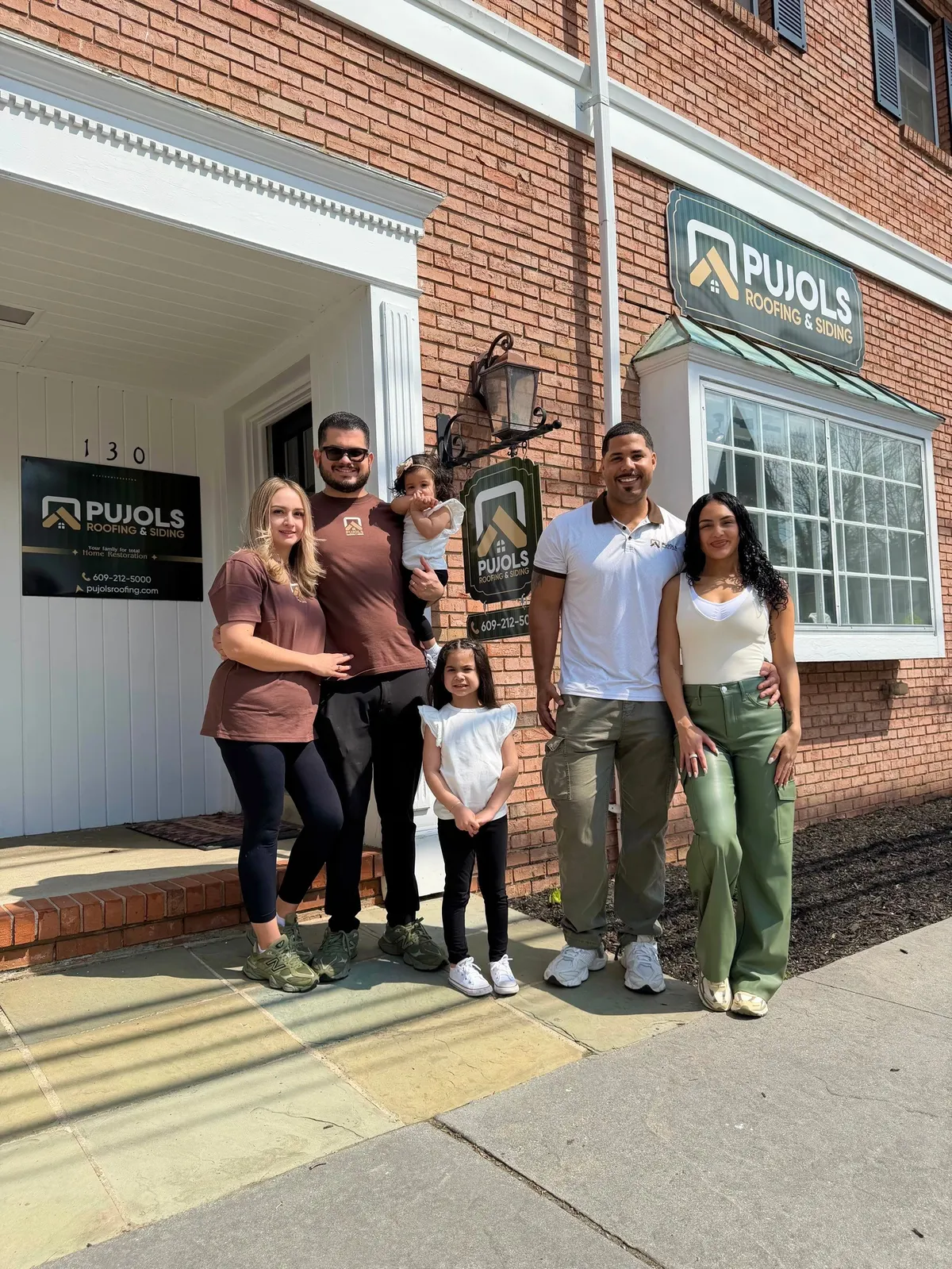
We're from here
We know these houses. We drive past them every day.
Rocky Hill is small: about 740 people on six-tenths of a square mile, a borough since 1889, tucked between Montgomery Township and Franklin along the Millstone River. Most of the town sits inside the Rocky Hill Historic District, 176 acres and 145 buildings that have been on the National Register of Historic Places since 1982. Our office is on Washington Street, the district's main street.
The houses along Washington Street, Crescent Avenue, Grove Street, Park Avenue and Reeve Road are mostly from the 1800s. Plain village houses and farmhouses. Queen Annes with turrets and wraparound porches. Colonial Revivals. The Dutch Reformed Church, built in 1856 in the Carpenter Gothic style, at the center of it all. The Rocky Hill Inn goes back to about 1825, and Rockingham, where George Washington wrote his farewell orders to the army in 1783, is just up the road.
On the newer streets, like Merritt Lane, Lemore Circle and Toth Lane, the houses are capes, colonials and split-levels from the middle of the last century. Either way, about half the homes in Rocky Hill were built before 1950. That's a lot of roofs with a story under them.
- 1783George Washington writes his farewell orders to the army at Rockingham.
- 1825About when the Rocky Hill Inn goes up.
- 1856The Dutch Reformed Church, Carpenter Gothic.
- 1889Rocky Hill becomes a borough.
- 1982The Historic District joins the National Register.
Questions
Questions Rocky Hill homeowners ask us
Do I need a permit to replace my roof in Rocky Hill?
For a single-family house, no construction permit: New Jersey treats replacing the roof covering as ordinary maintenance, along with siding, gutters and leaders. A permit is needed only if we replace rafters or roof sheathing, which does happen on old houses with rotted decking. If your house is in the historic district and the new roof will look different from the street, you also need the borough's preservation plan approval. We tell you which case you're in at the consultation.
My house is in the historic district. Can I still get a normal shingle roof, or Hardie siding?
Usually, yes. A new asphalt roof replacing an old asphalt roof in a similar color is in-kind and needs no approval. If the material or the look changes from the street, you file a preservation plan, most often a "minor" one the Historic Subcommittee reviews. The borough encourages wood but accepts other materials with conditions, and it wants the details kept: trim, cornices, brackets, porch parts, shutters that fit the windows. That's the kind of work our siding crew does anyway. We prepare the photos, description and product sheet the application asks for.
How much does a new roof cost in Rocky Hill?
The same as everywhere we work. We price roofs at $650 to $720 per square (100 square feet of roof), depending on size and shingle line, so a typical two-story house runs about $10,400 to $14,400 for the base roof. Old Rocky Hill houses often add plywood over plank decking, which is priced separately and shown in the report before you decide. The full table is on the roof replacement page.
What's under the shingles on an old Rocky Hill house?
Often two or three layers of roofing, and sometimes the original wood shingles under those. Under that, wide planks with gaps instead of plywood. We take it all down to the deck, sheath what needs sheathing, and put ice-and-water barrier at the eaves, valleys and chimneys before the new shingles go on. You get photos of every step.
You're on Washington Street. Does that actually change anything?
Yes. The visit happens fast because we're already here. If something comes up during the job, the owner is minutes away, not an hour. And after the job, the Pujols Roof Stewardship Program checks the roof every year for three years, which is easy to keep when your house is on the way to the office.
Can you do the roof and siding on an old house without it losing its look?
That's the point of doing both with one company. The roof edge, the gutters, the soffit, the trim and the siding all meet in the same few inches, and on an 1800s house those inches carry the details. One crew plans the roof line and the siding together, so the cornice, the brackets and the porch trim end up the way they should. When three companies each do a piece, the seams between them are where the look gets lost, and where the leaks start.
Roofing & exterior consultation in Rocky Hill